On October 22, 2025, Valve’s trade-up update changed a large part of the Counter-Strike 2 skin economy, with Covert skins and knives affected most directly. Cheap Covert skins surged, in some cases several-fold. Knife prices fell as the update created a new source of supply beyond case openings. A good example is Butterfly Knife | Fade in Factory New, which traded at around $4,300 shortly before the crash and now sits near $2,200. A year later, Fade still hasn’t returned to its pre-update price range, and neither have many other knives.
What Valve Changed
Valve expanded Trade Up Contracts so five regular Covert items could be exchanged for one regular knife or pair of gloves from a collection represented by the submitted skins. Five StatTrak Covert items could produce one StatTrak knife under the same collection rule. The change appeared inside the Contracts section of an update whose main headline was the return of Retakes to official matchmaking. Retakes, map adjustments, and technical fixes occupied most of the patch notes, while the trade-up change was described in only a few lines. Valve didn’t separate it into its own announcement or present it as a market-focused update. From that point, Covert skins became direct inputs for Gold items, and their collections determined which knife or glove outputs could appear.
The First Week in Numbers
Covert Skins
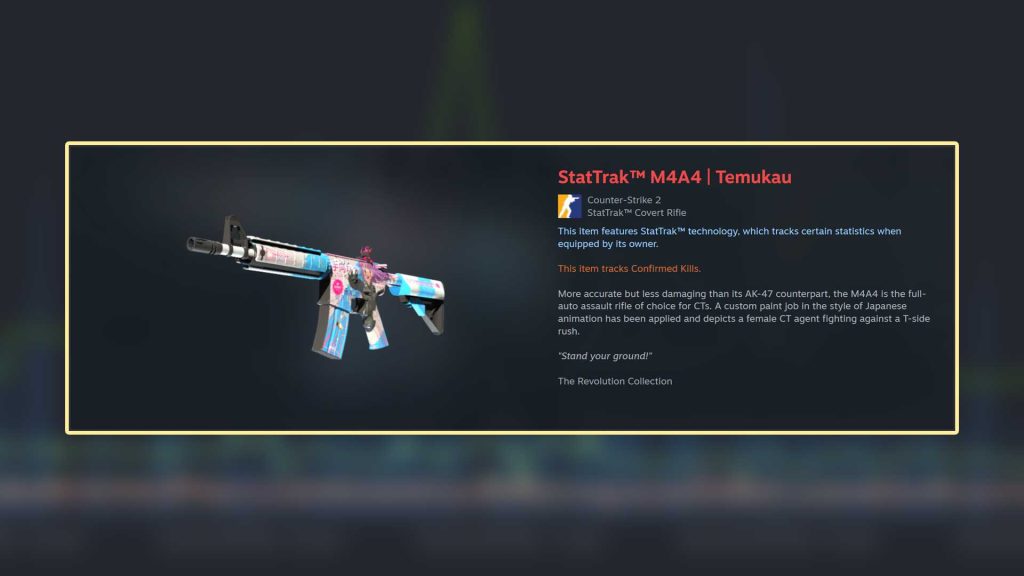
Popular Covert skins gained 30-50% on average during the first day, while some cheaper eligible reds increased by several hundred percent. The largest changes were concentrated among skins that provided access to wanted knife and glove pools. Demand increased fastest for lower-priced Covert skins, since buying five of them reduced the cost of entering a knife or glove trade-up. This pushed some previously inexpensive reds into a completely different price range within the first days after the update.
Knives and Gloves

Knives and gloves lost 40-50% across much of the market during the first reaction, with individual items falling by more than 60%. The additional supply created by Covert trade-ups affected ordinary knives and gloves most directly, especially items without rare patterns or exceptional floats. The wider CS2 skin market was valued at $6 billion on October 23 and reached its low of $3.5 billion on October 26.
One Year Later
By October 2026, the CS2 skin market had returned to around $6 billion. Many Covert skins still trade several hundred percent above their pre-update prices, while ordinary knives without rare patterns remain 40-55% below October 2025 levels. Rare pattern-based knives followed a different price path. Karambit | Case Hardened with a Blue Gem pattern and M9 Bayonet | Crimson Web with rare web placement retained much more of their value than standard versions. Their prices still depend heavily on pattern and float, so the additional knife supply created by trade-ups had a smaller effect on these collector variants.
How Traders Changed Their Strategy
The October 2025 update changed how many CS2 traders assess long-term positions. Some reduced their inventories or left the market after Valve showed that a single update could expand supply and reprice entire item categories. By mid-2026, trader discussions increasingly focused on selectivity instead of simply holding expensive knives and expecting gradual appreciation. Ordinary knives and gloves became harder to treat as predictable long-term positions. Other traders continued holding through the decline or bought during lower prices, especially when supply remained limited by discontinued collections, rare patterns, or other item-specific factors. CS2 investing remained active, while traders began paying closer attention to supply, collection status, and the possibility of another Valve update instead of assuming that expensive skins would keep appreciating.
How Players Get Knives and Skins Today
Trade-Ups and Direct Purchases
Trade-up contracts remain active, with Covert prices now closely connected to the knife and glove pools they can produce. Players use them when the cost of the required inputs leaves enough room for a desirable Gold output, although the exact knife, gloves, pattern, and float still depend on the contract result. Direct purchases are simpler for anyone looking for a specific item. Steam Community Market provides listings inside the Steam ecosystem, while third-party marketplaces usually offer broader inventory filters for float, pattern, stickers, and other item properties. This makes direct purchase the main option when the target skin is already known and the buyer wants to avoid the uncertainty of crafting or opening.
Cases and Terminals
Cases remain a common way to obtain skins, especially when players want access to a specific collection or its knife and glove pool. Valve hasn’t released a new classic case since Fever Case in March 2025, so the official selection hasn’t expanded through another traditional case release. For this reason, many players also use case opening sites, where the selection of cases is much broader than in the official CS2 client. Valve has also introduced Terminals as another format for obtaining skins. A Terminal shows the offered skin, its exterior, and its price before payment, allowing the player to accept the offer or skip it.
What Valve Changes Next
Valve continues to change both CS2 and the systems around it. Trade Up Contracts were expanded, Terminals introduced another way to distribute skins, Major stickers moved away from the previous capsule format, and new content such as additional chicken features has continued to appear. These changes suggest that Valve is unlikely to stop with the systems already introduced. The game keeps changing together with its item economy, making the next update especially important for the CS2 skin market.