Most players never think about the studio behind a slot until they notice that a handful of games on their phone feel noticeably smoother than the rest. Often the reason is that those games were designed for touchscreens from the beginning rather than adapted to them later. Habanero is one of the studios that built its catalogue that way, and its history is a useful way to understand how slots became a mobile-first genre.
From Flash to HTML5
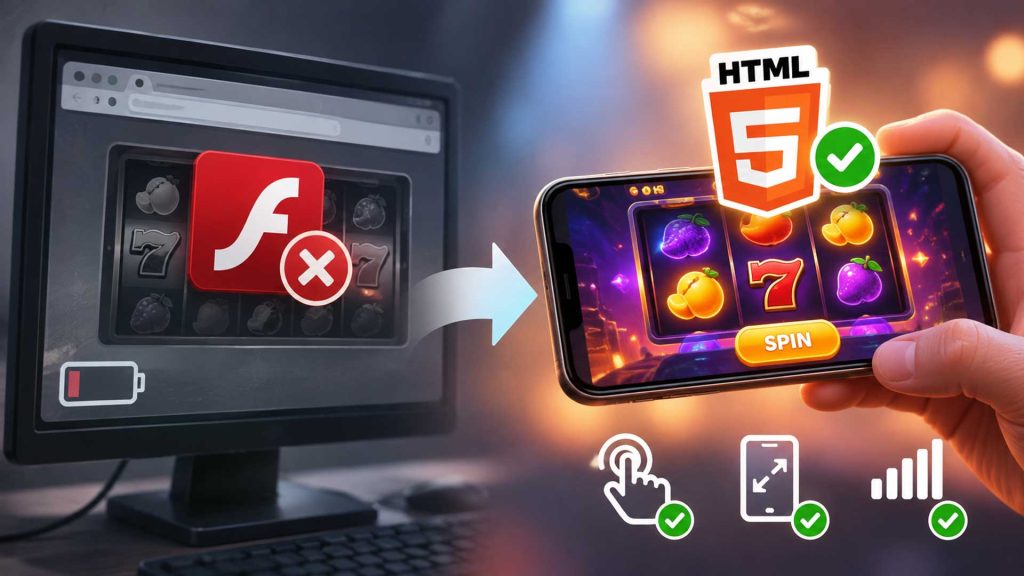
For most of the 2000s, online slots ran on Flash, a browser plug-in that did not work on iPhones and drained batteries on everything else. Studios that wanted to reach phones had to rebuild their games in HTML5, which runs natively in any modern browser. Adobe ended support for Flash at the end of 2020, but by then the shift had largely happened. The studios that started on HTML5 had an advantage: their games were designed for small screens, touch input and unreliable mobile connections from the first sketch.
Habanero, founded in Malta in 2012 according to the SiGMA provider directory, belongs to that generation. Its games are built in HTML5 and optimised for phones and tablets, and the studio specialises in random number generator games, mainly slots with a smaller range of table games and video poker.
What makes a slot mobile-friendly
Anyone who uses our game guides to get past a tricky level will recognise the logic: good design removes friction before it becomes a problem. A good mobile slot does a few specific things well:
- Symbols stay readable at phone size, with strong contrast and few tiny details.
- The spin button sits within thumb reach, and the paytable opens in one tap.
- Animations are short enough that a bonus round does not overstay its welcome.
- The game loads quickly on mobile data and recovers cleanly if the connection drops mid-spin.
Most Habanero casino games follow that template. Hot Hot Fruit, released in 2019, is a good example: a 3×5 classic fruit slot with bars, sevens and a free spins feature triggered by collecting wilds, designed to play the same way on desktop, mobile and tablet. The same year the studio released Colossal Gems, its 100th slot.
The design choices show up in small ways. Win animations are short, so the next spin is never far away. Bonus rounds announce themselves with clear on-screen prompts rather than relying on sound, which matters for the many people who play with their phone on mute. Menus stay out of the way until they are needed, leaving the reels to fill most of the screen.
A catalogue shaped by Asian markets
One detail that sets Habanero apart is where it grew up. A large share of its early success came from Asian markets, which is visible in titles such as Koi Gate, Fa Cai Shen and 12 Zodiacs that draw on Chinese mythology and symbolism. Many of those markets were mobile-first long before Europe or North America, with players who rarely touched a desktop computer. Designing for them meant designing for phones, and that discipline carried over into the rest of the catalogue.
The studio’s work has been recognised in the industry as well, including Best RNG Casino Provider at the 2018 Malta Gaming Awards and Casino/Slots Developer of the Year at the 2021 SBC Awards.
How to approach a new studio’s games
Treat a slot the way you would treat any unfamiliar game: read the rules before you play. The info screen lists the paytable, how features trigger, the stated return to player and, often, a volatility rating. A high-volatility title pays less often and in larger amounts, and a low-volatility one pays smaller amounts more frequently. Neither changes the odds of any single spin, which are set by the random number generator, but knowing the profile tells you what kind of session to expect.
The cheapest way to learn a game is to play it for free first, either in demo mode or with a free-to-play currency such as Gold Coins on a social platform, which carry no cash value. Social and sweepstakes platforms are not available in every US state, so check eligibility before signing up anywhere.
Why it matters
The rise of mobile-friendly slots was not driven by one studio, but studios like Habanero show what changed. Games stopped being desktop products squeezed onto phones and started being designed for the device most people actually carry. For players, the practical result is a better experience on a small screen. The odds are the same as they have always been, so the same advice applies: play for entertainment, set limits before you start and stop when it stops being fun.